ViniVault/Apps
Your own vinyl database, not a public one
ViniVault is not a catalogue of every record ever pressed. It is a catalogue of the records you own, with your notes on them.
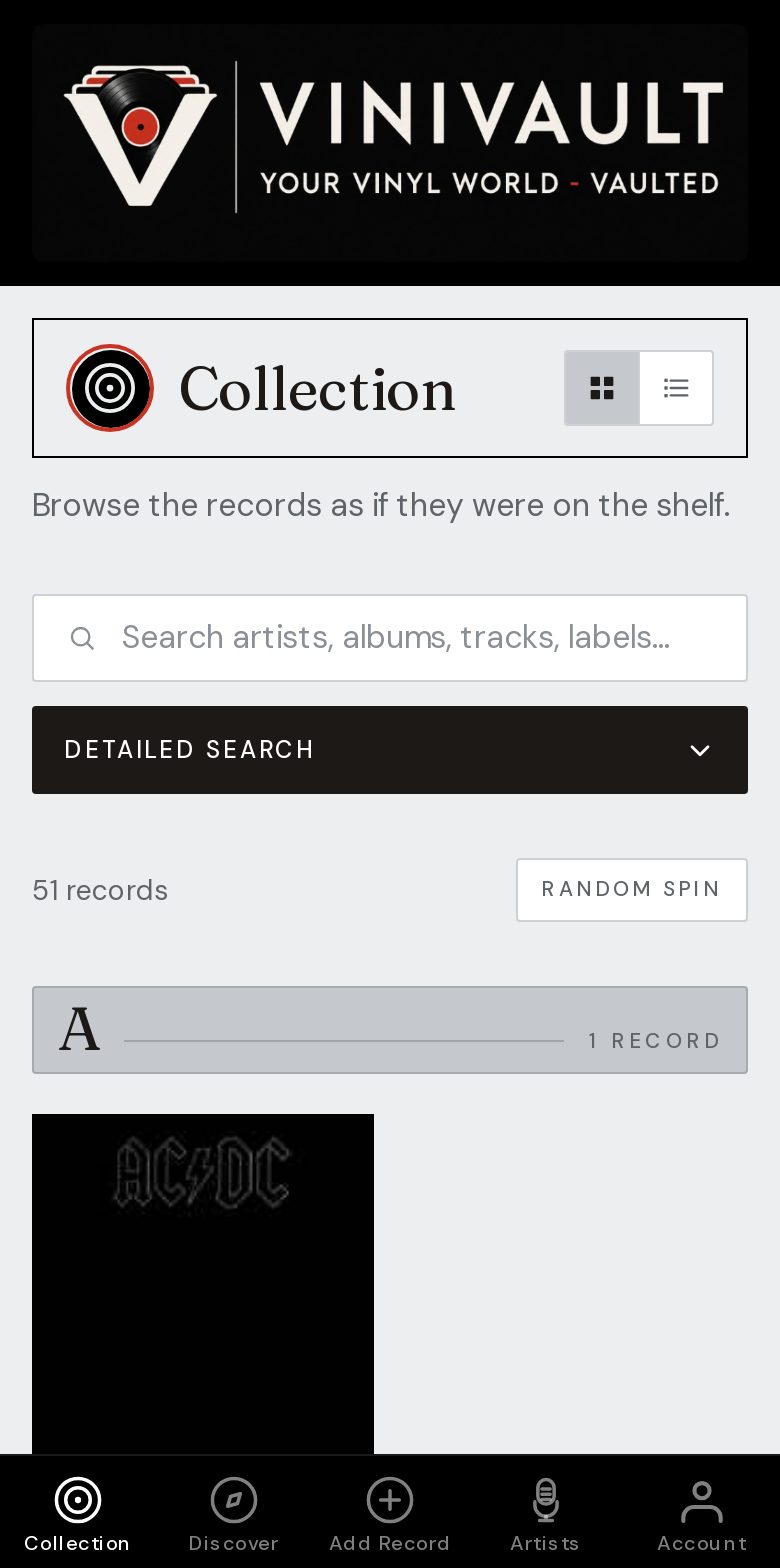
Your rows, your notes
You want to find a record by artist, year, genre, or label, and you want the price you paid stored on that row. That is a personal database. A database of every record ever pressed is a different product.
The big public catalogues are there to help you identify a pressing. They do not need to be the place where the collection lives, especially once your own notes are on the rows.
A personal database should also tolerate incomplete rows. You will not know every catalogue number on the first pass. Empty fields are allowed. A guessed number is worse than a blank one.
Your rows stay yours
Search finds artist, album, and track across the records you added. Statistics groups them by genre and decade, so you can see the shape of the shelf without building a tagging system first.
A typed price stays on the record and is the figure used in the collection total. Where you leave the price empty, a market guide can fill the gap. The wishlist is not part of the database of what you own.
How this works in ViniVault
Add records one by one, or import a collection you already keep on Discogs. After they are in, search and Statistics work on your vault, not on a public catalogue.
The import copies records into your account. It does not delete them from Discogs, and it does not keep the two lists in step forever. New purchases need adding where you want them kept.
Questions
- Do I have to build the database from nothing?
- No. You can add records one by one, or import a collection you already keep on Discogs. You can also catalogue from scratch with no Discogs account at all.
- Can I get a copy of the database as a file?
- Yes. Account exports the collection as CSV while you are signed in.