ViniVault/Organising
Catalogue an inherited record collection
An inherited collection arrives without your memory of what was paid or why it was kept. Cataloguing it is how you find out what is there.
Go crate by crate
Do not grade and price every record on the first pass. Get the artist and the title in, then mark anything that looks scarce or anything you might play. A finished crate is progress. A perfectly described first record is how people stop.
Names you do not recognise still belong on the list. They are the ones most likely to surprise you later, and they are the ones memory will drop first.
You will not know what was paid, and you often will not know why a record was kept. A note such as 'from the spare room' is enough. The story can stay short.
Find out what is there before you decide
Cataloguing is how you discover the shelf. Selling, giving away, or playing can wait until the names exist. A pile you have not named is easy to regret.
Value is a second pass, and only for the copies you care about. A guide price is not a reason to keep or discard a record on its own. Scarcest on the shelf is a clue for where to look carefully, not a verdict.
How this works in ViniVault
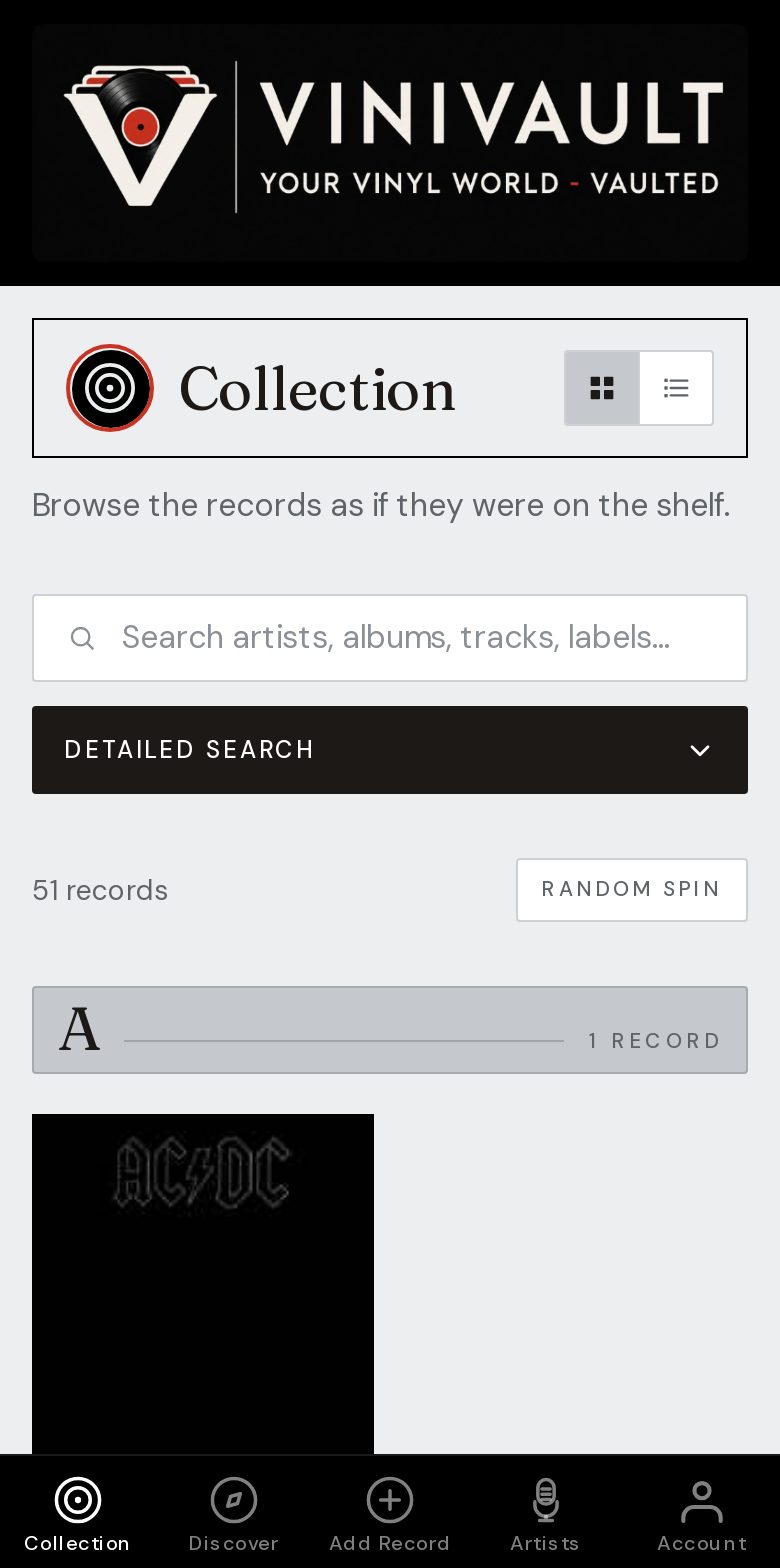
Add each record by search, barcode, or by hand. Use notes for where it came from, or for a sleeve that does not match the label. Collection value can wait until the list exists.
If the collection is large, the free shelf holds the first 100 records. Pro is £1.99 a month when you need to continue. The records already added stay on the account.
Questions
- Do I need to know what each record is worth first?
- No. Catalogue it, then look at value for the copies you care about. Most of an inherited shelf can wait.
- What if I do not recognise the artist?
- Add it anyway, by the name on the label. Unknown records are the point of the list.