
ViniVault/Value
Value a record collection when you insure it
Insurance wants a list and a method. ViniVault gives you the list, the prices you typed, and a market guide for the rest.
Bring a list, not a round number
A round number from memory is hard to explain later. A catalogue with artist, title, and a value on each row is easier to stand behind, because you can say where each figure came from.
Tell the insurer the guide is not a professional valuation. Some policies ask for a valuer's report above a certain sum. ViniVault does not replace that report. It gives you the list to take into the conversation.
Separate what you know from what is estimated. Typed prices are yours. The rest are a middle asking price for an ordinary used copy, or a recent sale when no asking price would do. A file that mixes them without saying so is a weaker file.
Keep a copy with the papers
Export a CSV from Account and store it with the policy, not only on the phone. Export again after a large addition. An old file describes an old shelf.
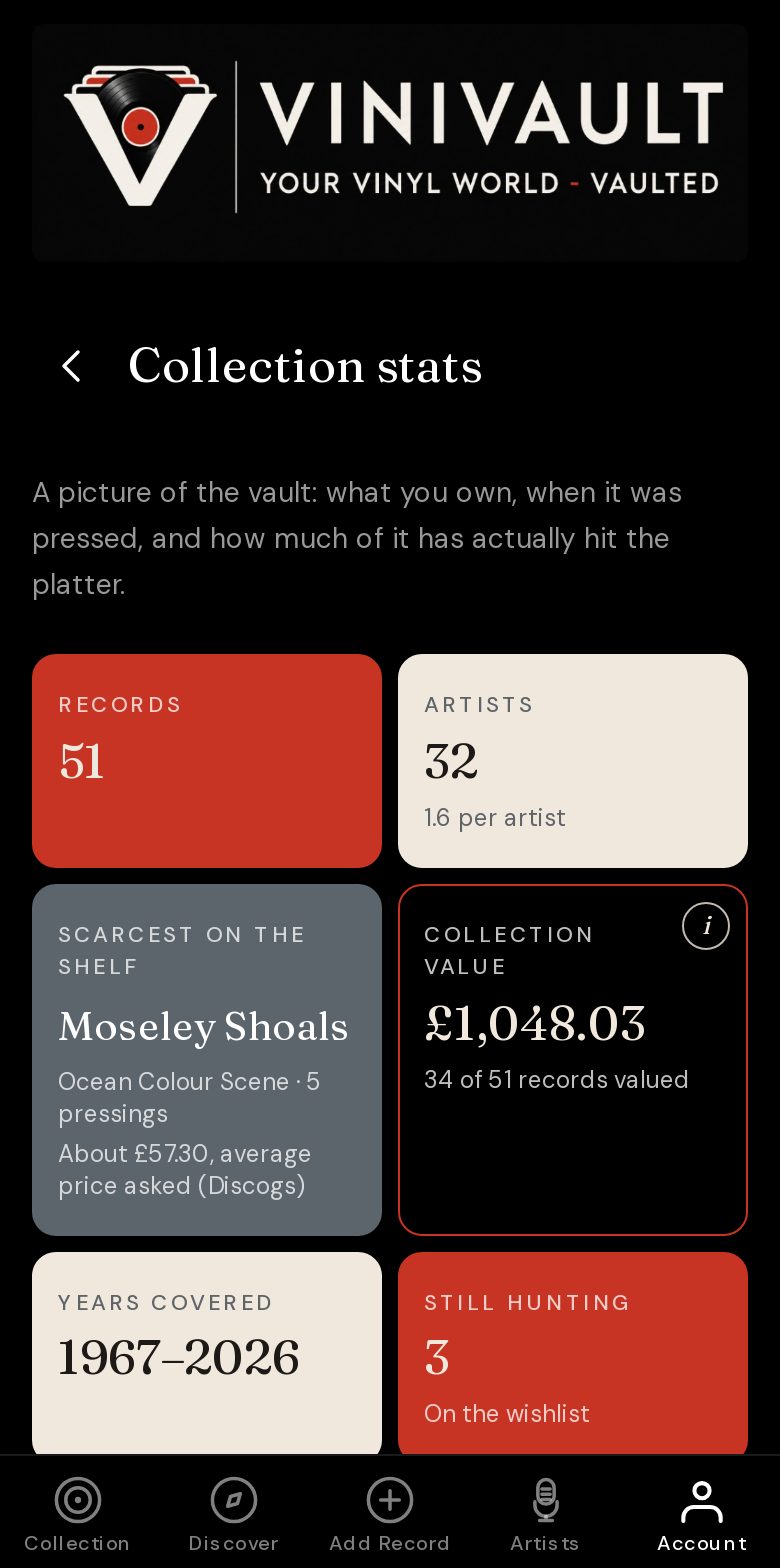
Photos of sleeves help you identify a record. They are not the inventory. The names and the values are. A count of how many records have a price belongs with the total, so a partial sum is not mistaken for a complete one.
How this works in ViniVault
Type the prices you know, let collection value cover the rest, and export the CSV. The total in Statistics is the working figure. The file is what you can hand over.
If a record has no usable price, it stays out of the total until you type one. That is safer than inventing a number for an insurer.
Questions
- Is this a formal valuation?
- No. It is a collector's guide. Use a valuer if the policy requires one, and show them the catalogue.
- Should the insured sum be the guide total?
- Only if your insurer accepts that method. Ask them. The guide is a reasoned list, not their number.