ViniVault/Value
Find the scarce records on your shelf
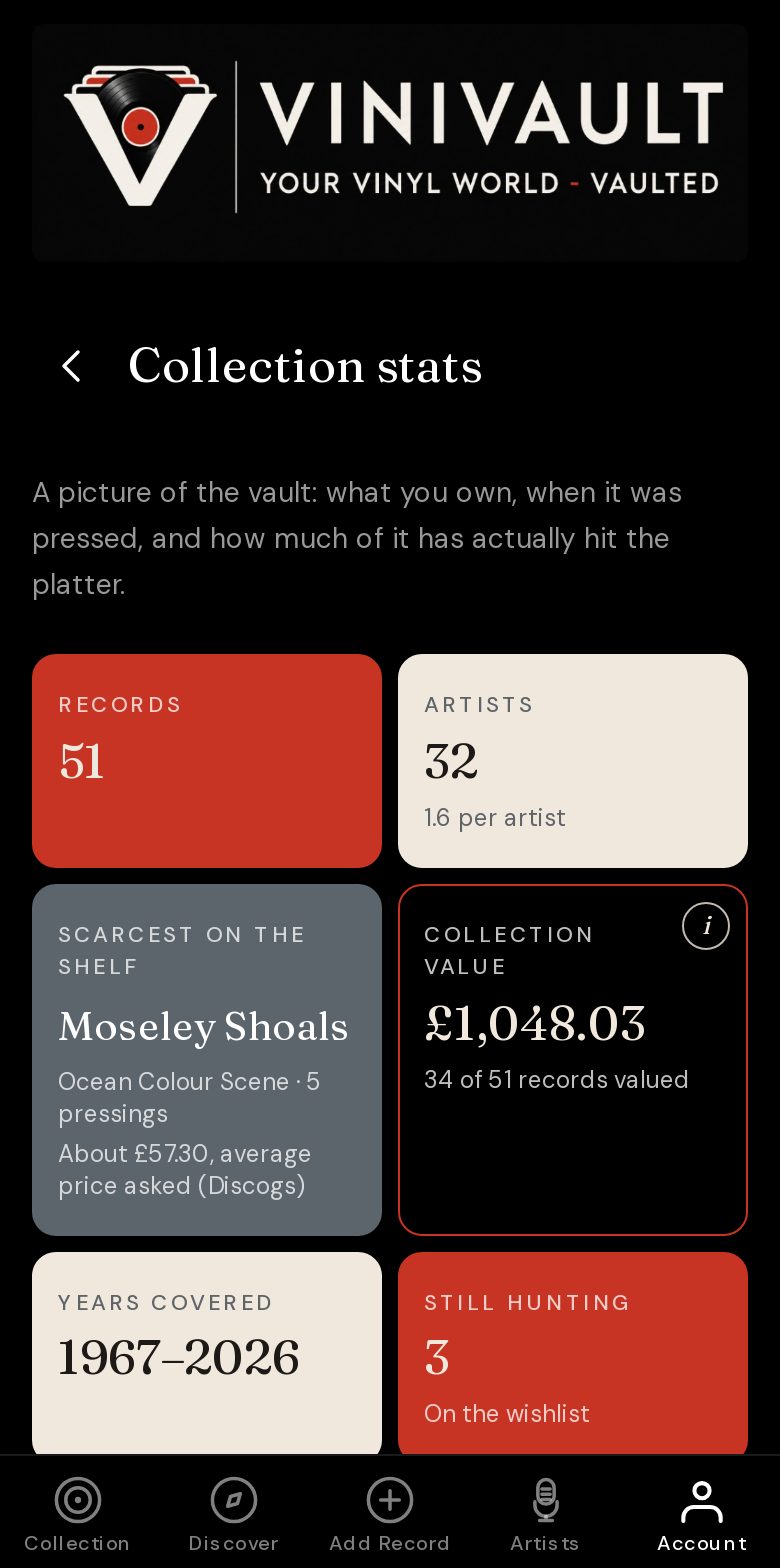
A record with very few known pressings is not the same thing as a record you love. ViniVault can point you to the copy you own that has the fewest known pressings.
Few pressings, not just famous names
A common album can be beloved and still easy to replace. A record with a handful of known pressings is the one to notice in a clear-out, even if you have not played it in years.
Scarcity is not the same as the price a buyer will pay this week. It is a clue for where to look first. A scarce record can be inexpensive, and a famous album can be ordinary.
The count is of known pressings of that catalogue master, among records you own that are tied to one. It is not a judgement of musical importance, and it is not a look at the condition of your copy.
Use it as a shortlist
Open Scarcest on the shelf when you are insuring, selling, or simply trying to understand a collection you inherited. Then read the guide price beside it, if one exists. No price is an honest result when the listings are not there.
A note on the record is still the place for what the number cannot say: a signed sleeve, a misprint, a copy you were told was rare and have never checked.
How this works in ViniVault
Statistics includes Scarcest on the shelf for owned records tied to a catalogue master, with a guide price when one exists. The rest of the shelf stays a click away.
The wishlist is not part of this. Scarcity here is about records you have, not records you are hunting.
Questions
- Does scarce mean valuable?
- Not always. It means fewer known pressings. Price is a separate guide, and condition is something only you can see.
- Will every record appear on that list?
- It looks at owned records that are tied to a catalogue master. A record you typed in by hand, with no master behind it, will not be ranked that way.