
ViniVault/Value
Log the price you paid for each record
What you paid is the one price you know for certain. In ViniVault it replaces the market guide for that copy.
Your figure wins
A record from a car boot and a record from a shop should not both show a generic asking price if you remember what you spent. The price you paid is the one figure you actually know.
You can leave the field empty. The guide fills in only where you have not typed a price. The moment you type one, including zero, that number is the one used for that copy.
Write it down while you remember the shop. A year later, 'about a tenner' becomes a blank, and the blank becomes a market guide that may not describe the afternoon you bought it.
Your figure is not a market claim
The price you paid is not always what the record would sell for now. That is fine. It is your record of the purchase. If you would rather the total used a current guide, leave the field empty.
A gift can be zero. Zero is a real price, not a missing one. It keeps that record in the total as nothing, instead of letting a marketplace price pretend you spent money you did not spend.
How this works in ViniVault
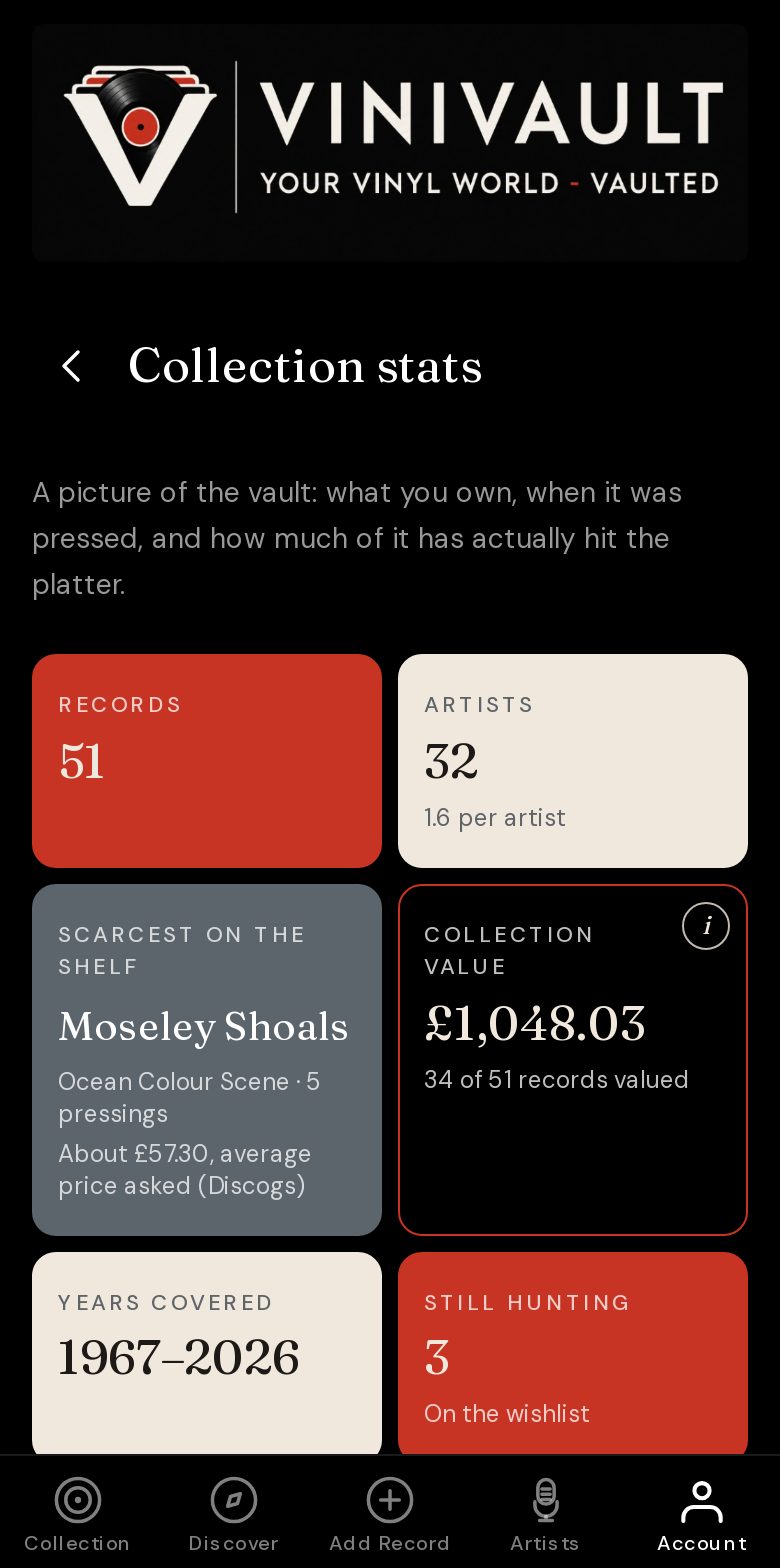
Open the record and enter the price you paid. Collection value uses that number. Records with no typed price fall back to a middle Discogs asking price, then recent eBay sales if Discogs has nothing usable.
The note on the record can say which shop and which year. The price field is the number. Together they are the story of the purchase.
Questions
- Can I enter zero if it was a gift?
- Yes. Type zero. That is a real price for that copy, and it is not treated as 'no price yet'.
- Can I change it later?
- Yes. Edit the price on the record. The total uses whatever is typed there now.