ViniVault/Shelf
Keep notes on a vinyl record
Notes are where a catalogue becomes yours: where you bought it, who signed it, why the sleeve is taped. ViniVault stores that on the record.
One place for the story
Receipts get lost. A sentence on the record page does not. Write the shop and the year if you want the memory kept: where you bought it, who you were with, why the sleeve is taped, who signed it.
Notes are private, which matters when the story is personal or the copy has a fault you would rather not broadcast. The vault is not a public profile. The note is not a listing.
Use the note for what the other fields do not hold. The price you paid is a number. Condition is the state of the vinyl and the jacket. The pressing is the release you chose. The note is the rest.
Write what you will not remember
A catalogue number you had to read off the label, a ceiling you set for a want, a warning that the first track jumps: these are the lines that save a mistake later. A line or two is enough for most copies. Write the sentence you will want, not an essay.
Search finds the record. The note is for when you have found it. Do not rely on the note as the only place the artist and title exist. Those belong on the record itself, so the shelf can be sorted and searched.
How this works in ViniVault
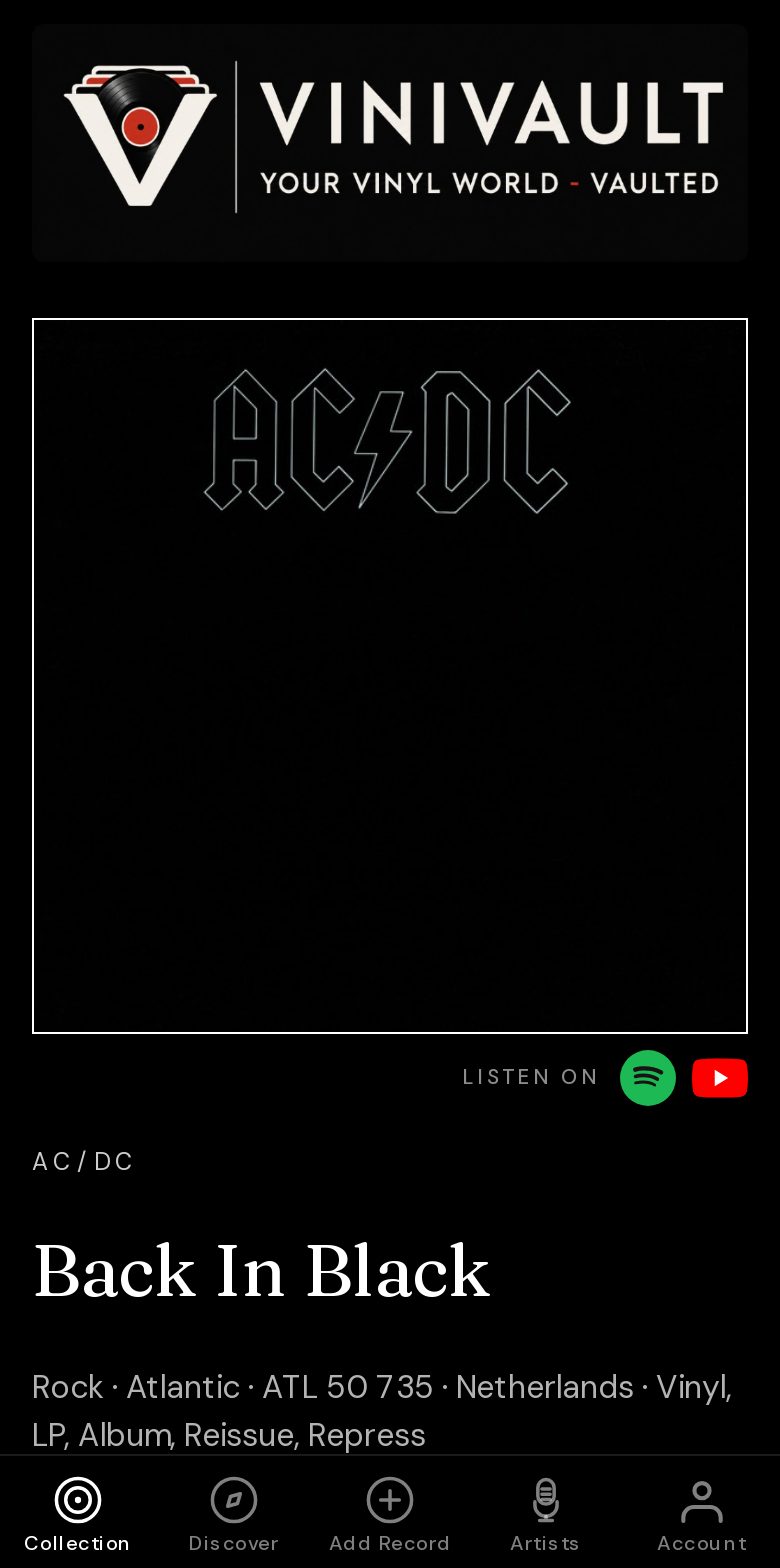
Open the record and add the note. It sits with condition and the price you paid. On a wishlist record, the note can hold the pressing and the price you will not go past.
If you export a CSV, the notes travel with the list. That file is a sensible thing to keep with household papers, separate from the phone.
Questions
- Is there a length limit I should worry about?
- Write the sentence you will want later. A line or two is enough for most copies.
- Can I see someone else's notes?
- No. Notes stay in the vault of the person who wrote them. Each collector has their own account.