ViniVault/Shelf
Keep a listening history of the vinyl you play
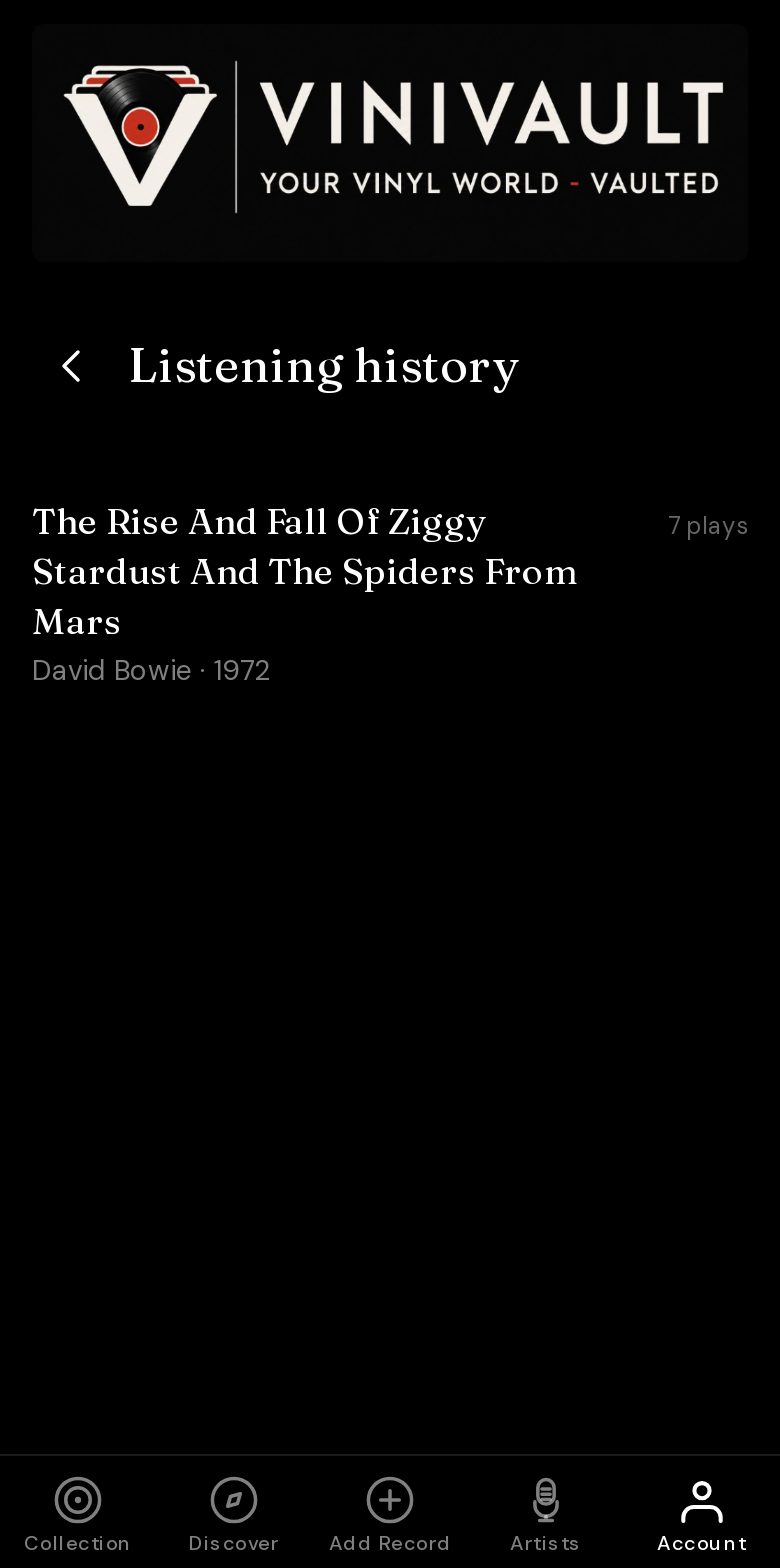
Keep a log of the records you actually play. That is separate from the day you added them to the catalogue.
What you play, not what you bought
A collection sorted by purchase date hides the records in heavy rotation. A play history shows them, which is a different picture of the same shelf: what you reach for, not what you bought.
It is also a prompt. A record you have not played in years is a candidate for a quiet evening, or for a clear-out. The history does not decide that for you. It shows you the gap.
Listening history is separate from the day you added the record. Cataloguing a shelf in a weekend would otherwise look like you played everything on Saturday. The log is the plays, not the typing.
A log, not a score
Playing a record does not change its value, its rating, or the price you typed. Statistics can show what you play most. The price guide still uses your typed price, then a market figure, and it ignores how often the record left the shelf.
Random Record is the other way round. It picks something from the collection so you do not only replay the usual side. Listening history is the record of what you already chose.
How this works in ViniVault
Listening history sits on the account. The catalogue itself stays the inventory: artist, title, pressing, notes, and price. Use the history when you want to see the shelf in the order you played it.
The log is private. It is not a public listening feed, and it is not shared with anyone who borrows a record.
Questions
- Does playing a record change its value?
- No. History is a log. Value uses prices, not how often you played it.
- Does adding a record count as playing it?
- No. The day you catalogued it and the day you played it are different. The history follows the plays.