ViniVault/Value
Do not value a shelf at the cheapest copy
The cheapest listing is often a poor jacket or a stray item. ViniVault uses a middle asking price for ordinary grades instead.
Cheap listings shrink a shelf
One record offered for a penny, or for a token pound, pulls a collection down if you treat the cheapest ask as the value. Those listings are often a poor jacket, a stray item, or not a serious sale at all.
You can still type your own price when you know the copy is rough, or especially clean. The guide does not grade the record in your hands. Your typed price is how you correct it.
The middle of the ordinary grades is calmer. Very Good, Very Good Plus, and Near Mint are the asking prices used. The cheapest of them is not automatically the answer, and prices under a pound are set aside.
A low listing is not a fact about your copy
Someone else's damaged jacket does not describe your record. Using it as the price of every similar album makes a careful shelf look worthless, which helps nobody except a buyer hoping you have not looked.
If Discogs has no usable asking price after that filter, the guide can turn to recent eBay sales of the album on vinyl. If that is empty too, the record stays out of the total rather than inheriting a nonsense figure.
How this works in ViniVault
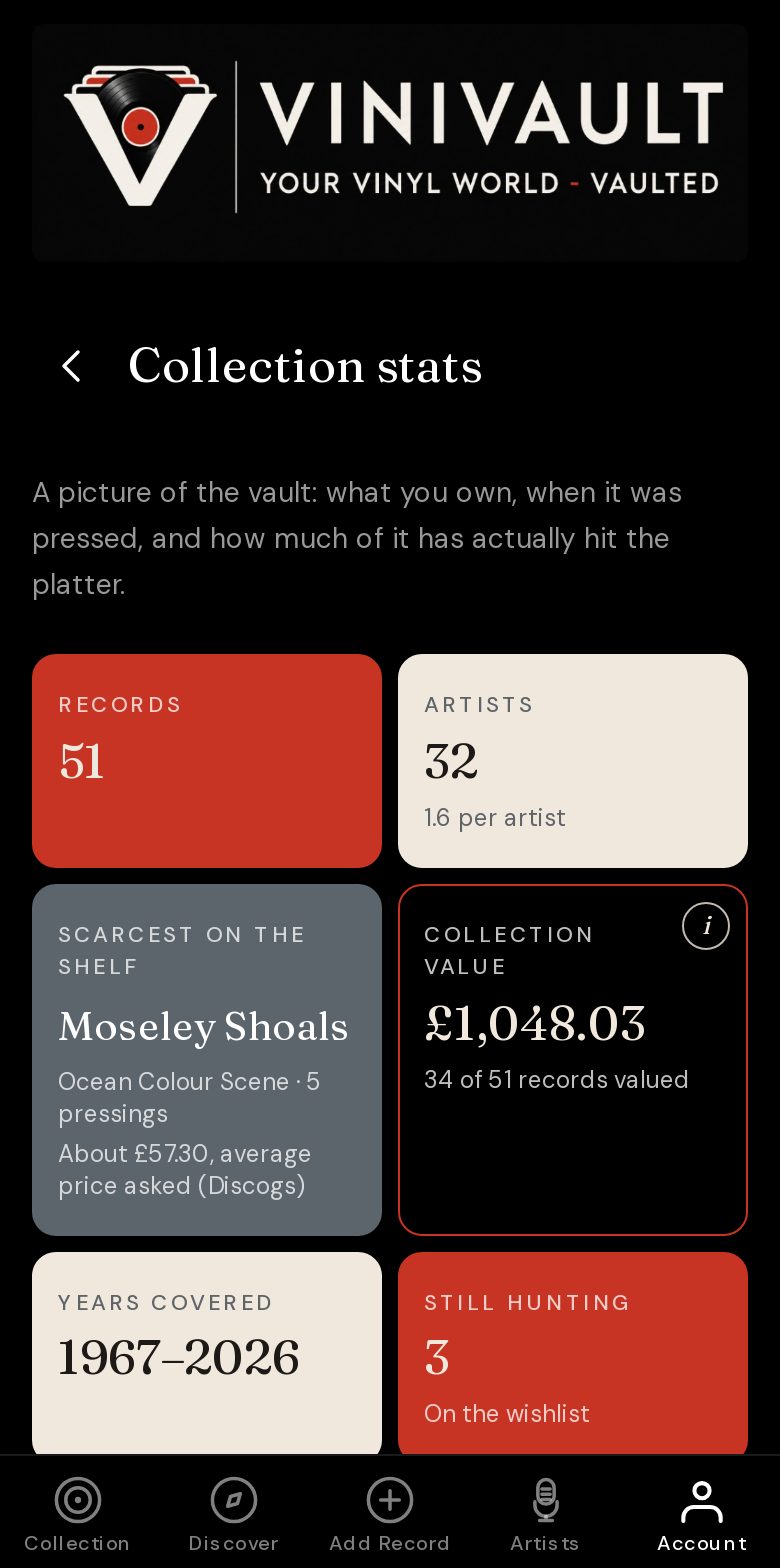
The guide takes the middle of those asking prices. Your typed price replaces it for any record you choose, including zero. The collection total then says how many records are included.
Do not describe the result as an average of the cheapest copies, or as an average of past sales, unless that record actually fell through to eBay. The usual figure is a middle asking price.
Questions
- Can I override one record?
- Yes. Type a price on that record and it is the figure used, instead of the guide.
- Why ignore the cheapest copy?
- Because it is often not a normal copy. A middle price for ordinary grades is a fairer guide to a played record than the bottom of the list.