
ViniVault/Formats
Catalogue an album and LP collection
Albums are the spine of most shelves. ViniVault catalogues the LP you own, with the year, the sleeve, and the tracks.
One row per album you have
Do not add the same album twice unless you truly own two copies. A reissue and an original are two rows, because they are two objects. A single copy is one row, however many times you have played it.
The year on the jacket and the year the album was first released can differ. Catalogue the copy you hold. A note can say 'later pressing' or 'the one with the original inner' so the year on the page does not have to do all the work.
Albums are the spine of most shelves, which makes them easy to half-remember. Search still beats walking the rack, especially once the collection runs past the records you can see from the chair.
The copy, including what came with it
A gatefold is still one album. Mention a poster, a booklet, a sticker, or a missing insert in the notes if it matters to you. Those extras disappear, and the note is how you know whether yours still has them.
Choose the pressing when you add it, so the sleeve and the track list belong to that release. If you are unsure, pick the closest match and say so. You can edit the record when you have read the label.
How this works in ViniVault
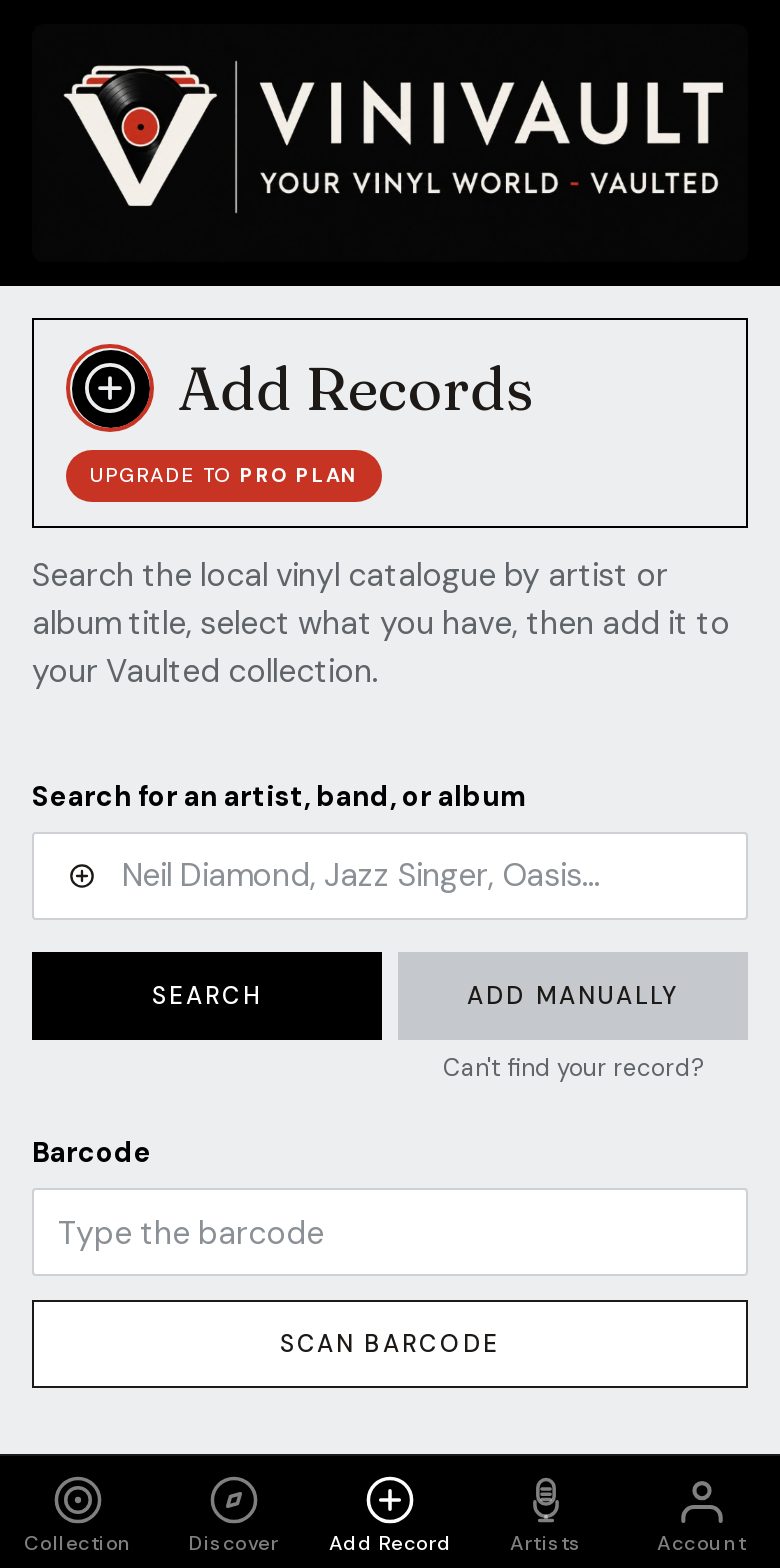
Search the album, choose the pressing, and save it. Type the price you paid if you know it. Statistics can show decades once a run of albums is in.
A second pressing you hope to find belongs on the wishlist, not as a second owned row. Collection value only counts records you have.
Questions
- What about gatefold sleeves?
- They are still one album. Mention a poster or a booklet in the notes if it matters.
- Should a reissue replace the original in the catalogue?
- Only if you no longer own the original. If both are on the shelf, keep both rows.